Micro Shadowing (Micro Shadowing) is a technical term that is extremely important in rendering and optimizing game graphics (technical art). Normal Map (Normal Map) and occlusion map (AO A technology that multiplies the minute unevenness information of the map by the incident angle of the light in a shader to synthesize ultra-high-precision self-shadows on the microscopic fibers of the material and the valley bottom of the rock surface.
Real-world analogy: When the setting sun hits the microscopic ``bottom of the thread mesh'' of the denim fabric of jeans from an angle, the mesh itself casts an extremely small shadow on the threads next to it, which is perfectly drawn to bring out the roughness to the utmost.
Shadow maps can handle the ``darkness behind microscopic wrinkles in the crevices and unevenness of fibers'' on the surface of materials, which cannot be physically depicted. Then, depending on the angle at which the light shines diagonally (the angle of incidence), the bottom of the valley automatically sinks into black (self-culling), giving the human eye the illusion of an intensely realistic tactile sensation that ``this material is real, deep, three-dimensional fiber.''
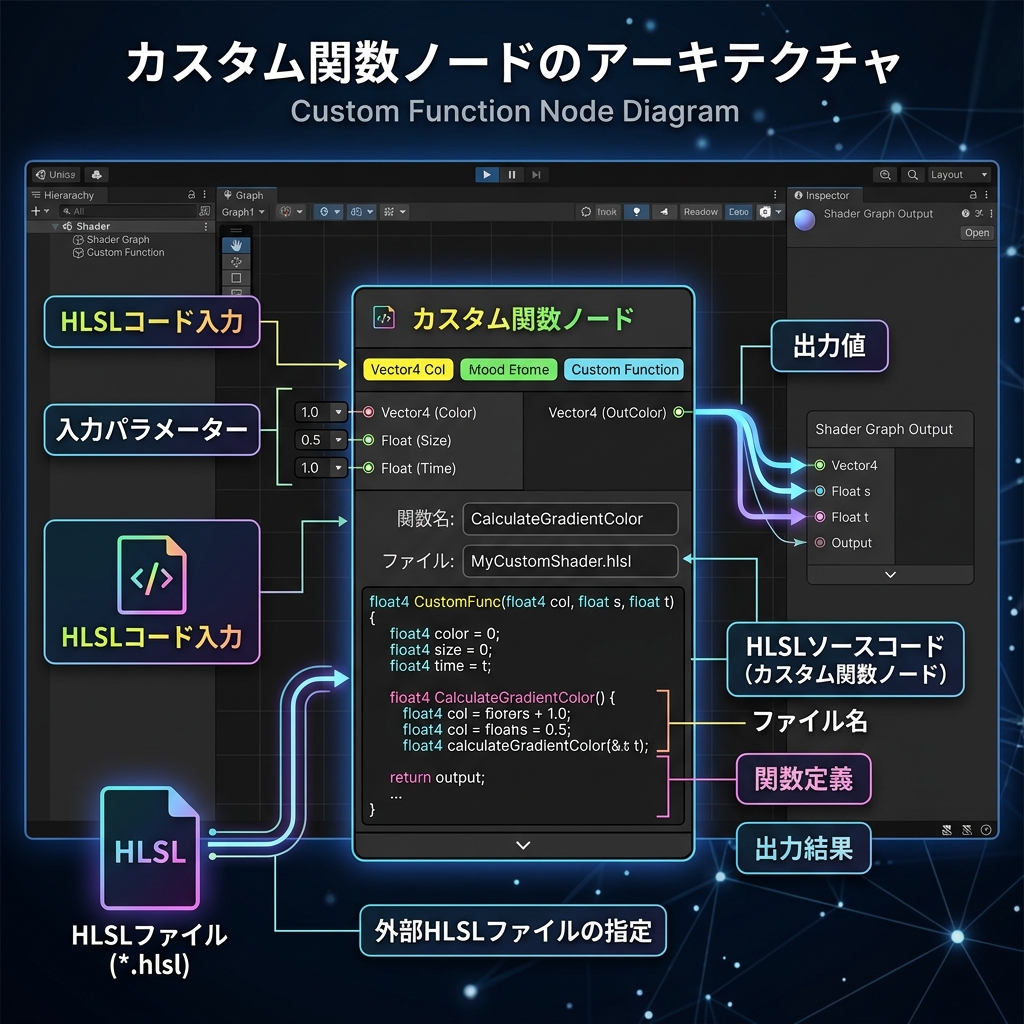
Figure: An infographic that clearly illustrates the basic processing flow and mechanism of Micro Shadowing (Micro Shadowing) in Japanese notation
Detailed mechanism and operating principle
In the Shader Graph, we blend the occlusion strength and the light vector (the dot product of the normal and the light direction) and apply the multiplication calculation of "Micro Shadowing" (Micro Shadowing) to the material, which darkens the gaps more deeply as the light hits from an angle.