Dynamic Resolution (Dynamic resolution / Dynamic resolution) is a technical term that is extremely important in the rendering and optimization of game graphics (technical art). An explanation of dynamic optimization technology for professionals that monitors the game's processing load (frame rate) in real time and automatically lowers the 3D resolution only at moments when the GPU load suddenly increases, such as when an effect explodes, to absolutely prevent FPS drops (stuttering).
Real-world analogy: A variable bypass system that constantly monitors road congestion (GPU load) with sensors, and automatically widens the lanes to adhere to the speed limit (frame rate) only at the moment when the number of cars increases and congestion (stutter) is about to occur
Dynamic resolution is designed to "constantly monitor the game's heart rate (the milliseconds it takes to process one frame) like a doctor, and at the moment when the heart rate becomes difficult (the moment of big explosion)" ), it momentarily increases the pixel count (resolution) of the surrounding scenery to remove the burden on the GPU, and once the crisis has passed, it returns to the original ultra-high resolution as if nothing had happened, an intelligent automatic gear change system in milliseconds. Players are so engrossed in the intense action that they physically never notice the slight drop in resolution (slight blur) for that "second" of an explosion. This is the ultimate optimization that combines aesthetic beauty with a smooth play experience that will never stutter.
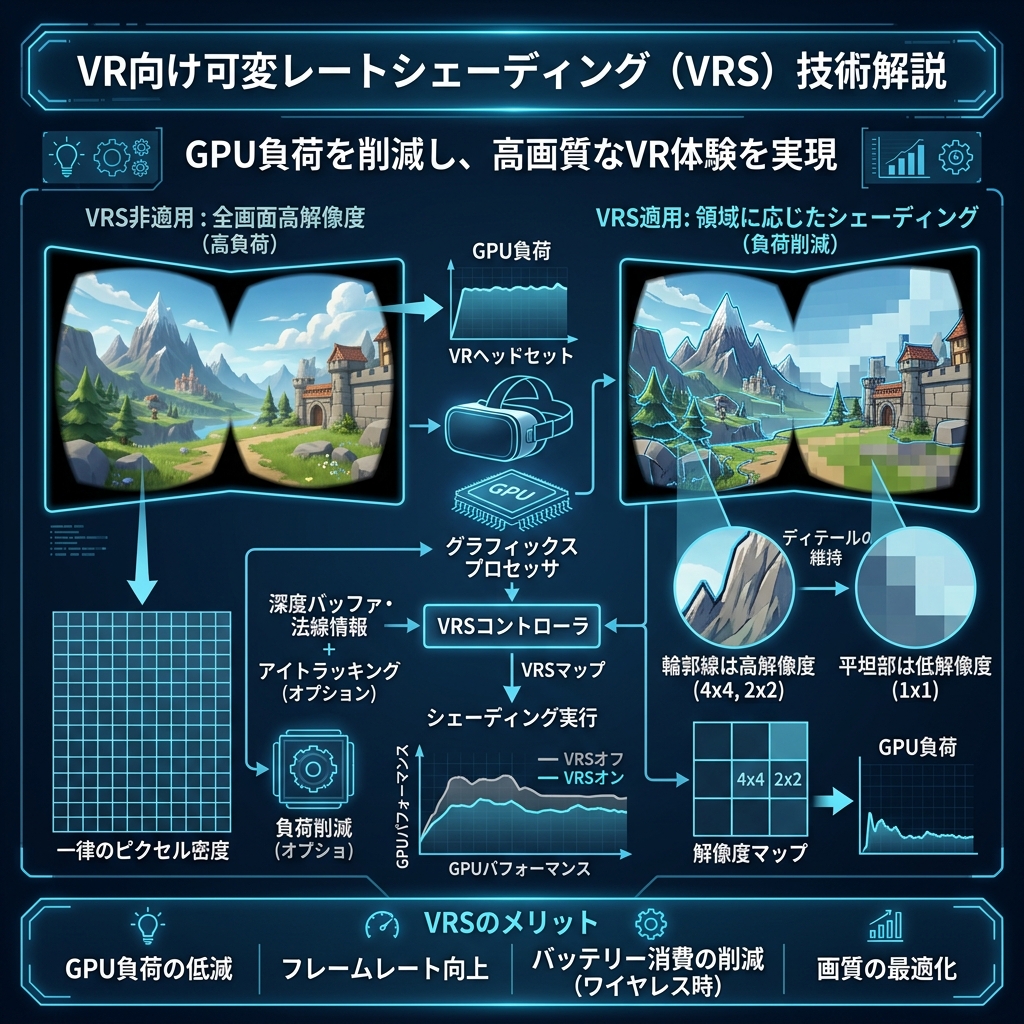
Figure: An infographic that clearly illustrates the basic processing flow and mechanism of Dynamic Resolution (Dynamic Resolution / Dynamic Resolution) in Japanese notation
Detailed mechanism and operating principle
Enable the "Dynamic Resolution" function to automatically slide down the resolution of the 3D world (Render Scale) to "0.7x" in real time only for frames where the frame time is about to exceed the limit value, and automatically return to "1.0x" as soon as rendering is complete.