G-Buffer (G-buffer / geometry buffer) is a technical term that is extremely important in rendering and optimizing game graphics (technical art). In deferred shading, an explanation of multiple large texture groups that temporarily store shape (geometry) information such as color, normal, depth, and smoothness of objects at each pixel on the screen.
Real-world analogy: Before bringing food to the table, a temporary pallet board on which ``meat, vegetables, and sauces'' are placed in small portions for each plate (G-buffer texture)
G-Buffer is a set of huge trays (textures) that temporarily save the elements that make up a picture in small portions in the ``color plate'', ``bumpy (normal line) plate', and ``depth plate'' instead of painting the completed picture (screen screen) all at once.'' After all the trays are assembled, the light (light calculation) is calculated and mixed together from the top of these trays, allowing unlimited lighting without worrying about the number of objects.
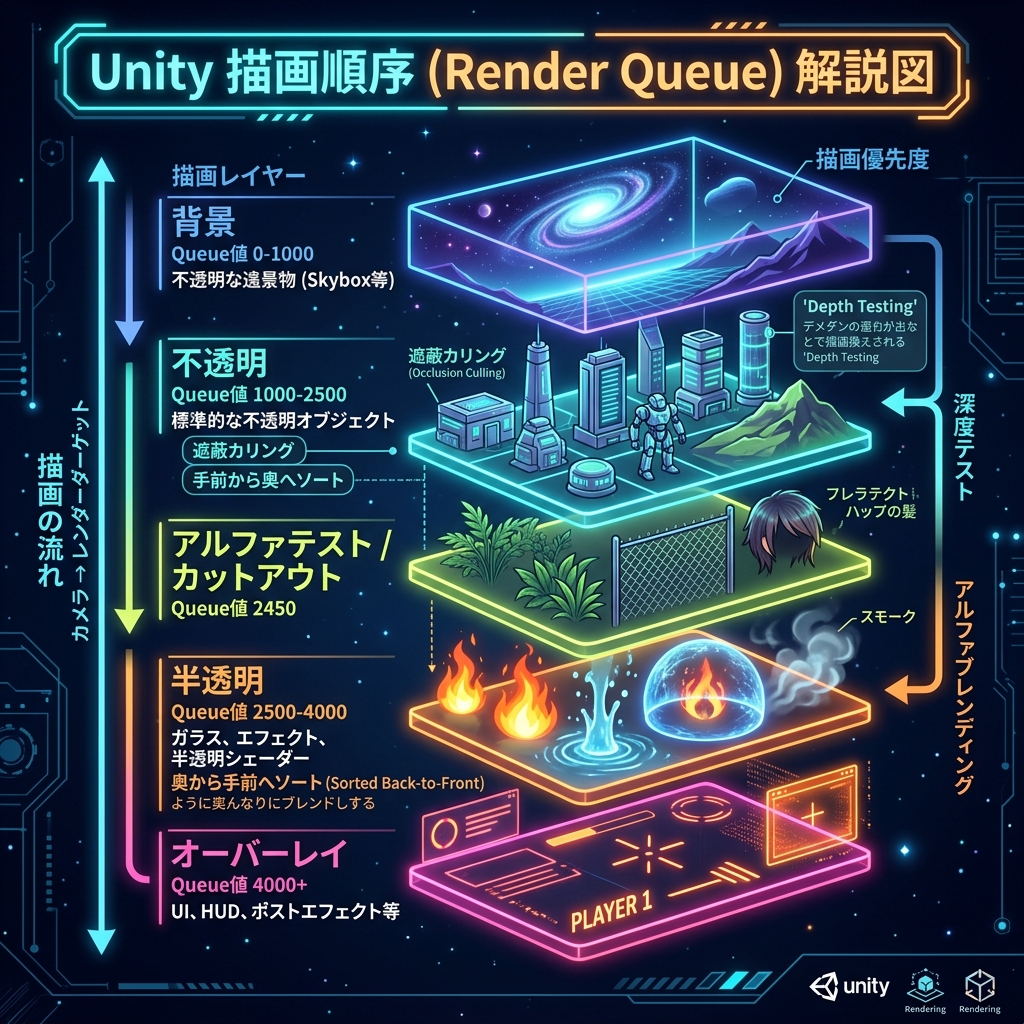
Illustration: G-Buffer (G-buffer / An infographic that clearly illustrates the basic processing flow and mechanism of Geometry Buffer) in Japanese.
Detailed mechanism and operating principle
Correctly understand the data structure and number of bits of each render target (RT0: Albedo, RT1: Specular/Smoothness, RT2: Normal, RT3: Lighting/Depth) of G Buffer (Geometry Buffer) and minimize unnecessary information writing.