Multi-Pass Rendering is a technical term that is extremely important in rendering and optimizing game graphics (technical art). In VR drawing, after all objects for the left eye have been drawn, the camera position is shifted to the right eye again and all drawing processing is repeated from scratch.This stereo drawing method emphasizes compatibility.
Real-world analogy: A stubborn painter who ``redraws a picture for the right eye and a picture for the left eye in order from beginning to end'' on two canvases
Multi-pass rendering is ``In order to create a 3D stereoscopic photograph, we first draw a picture perfectly on the left-hand canvas (pass 1), and when we are finished, we move the easel to the right and redraw the exact same scene from scratch on the canvas for the right eye (pass 2)'' It takes twice as long (the CPU load is very high), but because it is drawn using brute force without using any special shortcuts (instancing technology), you can have absolute peace of mind (high compatibility) that no matter how old the paints or old drawing methods (legacy shaders) you use, you will be able to create perfect 3D stereoscopic vision without fail.
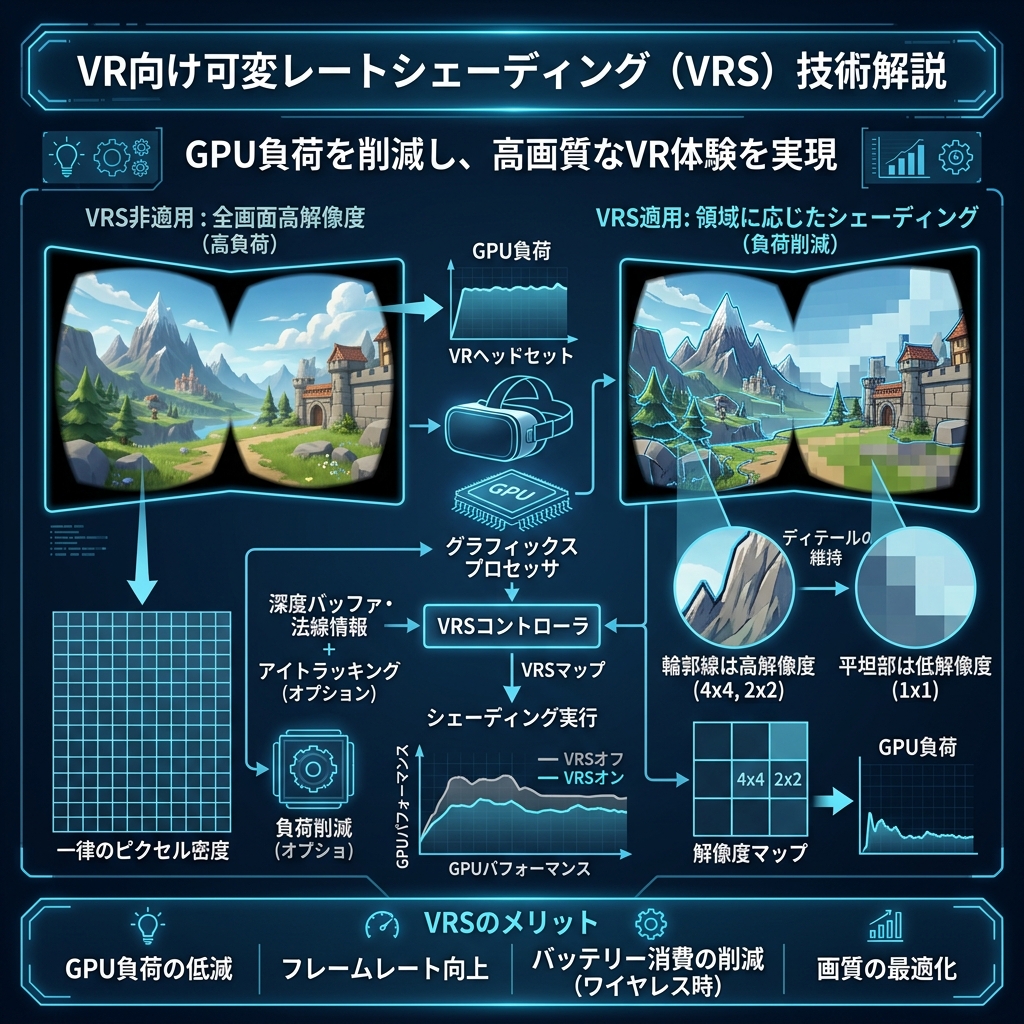
Figure: Infographic that clearly illustrates the basic processing flow and mechanism of Multi-Pass Rendering in Japanese.
Detailed mechanism and operating principle
Return the stereo rendering settings to the classic and most compatible "Multi-Pass" (but be careful, this will double the draw call cost).