Ray Tracing (ray tracing / DXR) is a technical term that is extremely important in rendering and optimizing game graphics (technical art). An explanation of next-generation rendering technology that physically simulates and tracks the countless ``rays'' emitted from light sources within the screen, completely reproducing accurate mirror-like reflections, realistic light refraction, and realistic light bounce (indirect light).
Real-world analogy: A physical experiment system that completely stops drawing on the screen and calculates real light by emitting a ``laser beam (ray)'' from every pixel on the screen, and ``counting back the bounce and refraction of light in real time'' every time it hits an obstacle or glass
Ray tracing is the process of“completely eliminating all digital lies (trompe l’oeil) and moving each pixel of the screen through an ``invisible laser beam arrow''. This is the ultimate light physics simulation system that faithfully calculates the behavior of real light by emitting a beam of light and every time it hits something, it says, ``This is a mirror, so let's reflect it 90 degrees,'' or ``This is glass, so let's refract it and dye it the color of the beer in the back.'' There is no longer any need for numerous tricks such as "reflection probes" and "shadow maps", and the perfect reflections like a water mirror, the beautiful indirect light of the atmosphere, and the dazzling refraction of gemstones will automatically appear on the screen, 100% the same as in the real physical world.
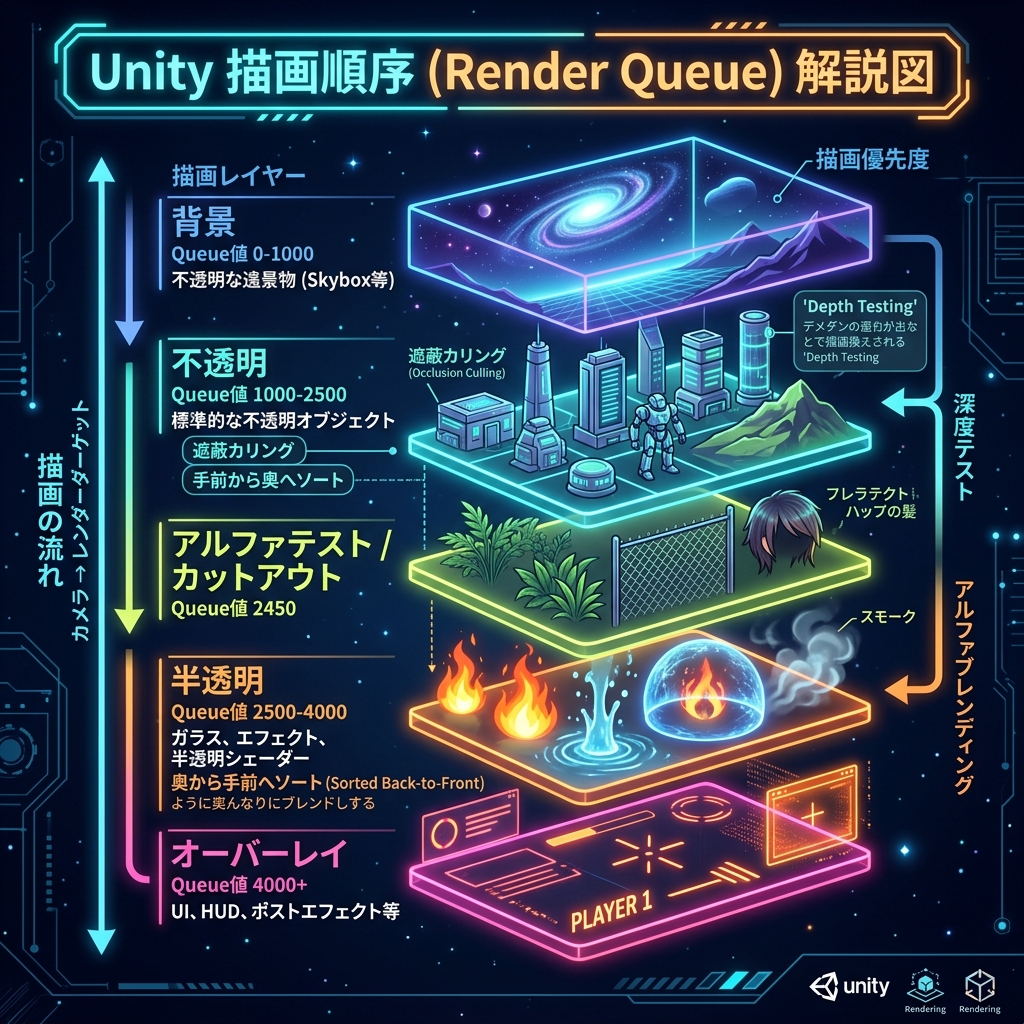
Illustration: Ray Tracing (Ray Tracing / An infographic that clearly illustrates the basic processing flow and mechanism of DXR) in Japanese.
Detailed mechanism and operating principle
Enable Ray Tracing (Ray Tracing) and use the GPU's built-in Ray Tracing dedicated core (RT Core) to physically simulate scene collision detection by emitting countless lines of light from every pixel on the screen.