Shader Compilation is a technical term that is extremely important in rendering and optimizing game graphics (technical art). An explanation of the process of translating and building human-written source code (HLSL and Shader Graph nodes) into a binary instruction set (machine language) that can be directly understood and executed by the target graphics board (GPU).
Real-world example: Translation work where a script (shader code) written in Japanese is rewritten into a ``translated book in various languages'' for theater company members (GPUs) who can only speak English or French
Shader compilation is an interpretation process that translates a production plan (Shader Graph) written in Japanese into a specialized machine language script that can be read by the theater company members of the specific stage (GPU hardware), such as English (DirectX), Chinese (Metal), or German (Vulkan), without making any mistakes.'' This translation work is very detailed and time-consuming, so if you try to translate thousands of combinations (variants) of patterns at once, the translation team will be overwhelmed and the entire game will stop (compilation star). It is important to take an approach that reduces this waiting time to zero by using techniques such as pre-translation and asynchronous translation.
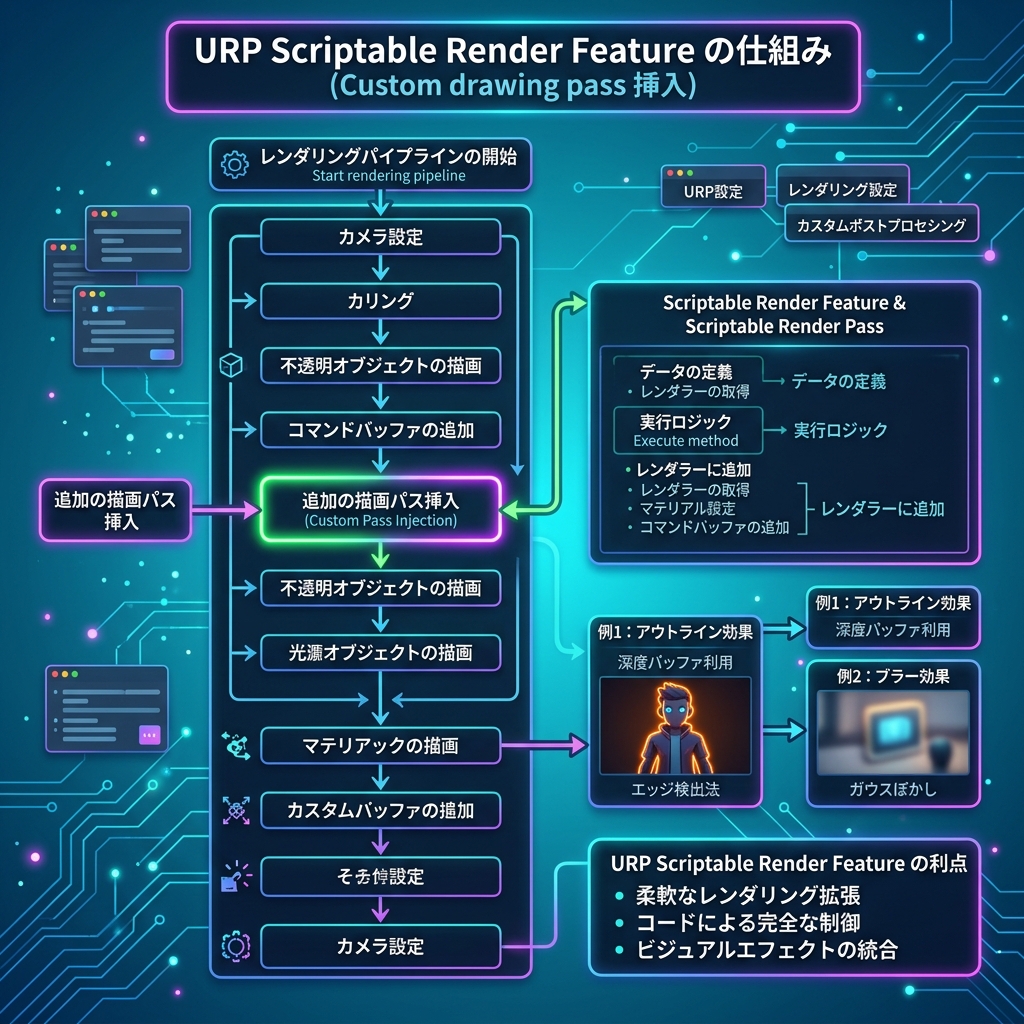
Figure: Infographic that clearly illustrates the basic processing flow and mechanism of Shader Compilation in Japanese notation
Detailed mechanism and operating principle
Enable asynchronous compilation (Asynchronous Shader Compilation) in Unity settings (Shader Compilation) and continue work by temporarily drawing with a dummy shader without freezing the editor during compilation.