Tile-Based Deferred Rendering is a technical term that is extremely important in rendering and optimizing game graphics (technical art). A memory-saving and high-speed deferred drawing method that divides the screen into grid-like tiles and calculates only the lights in each tile against the G-buffer.
Real world example: Pre-sorting and delivering mail to each neighborhood association
Rather than having to travel back and forth to the house for each piece of mail, letters (lights) are grouped by delivery area (tile) and the person in charge of that area distributes them all at once, maximizing delivery efficiency.
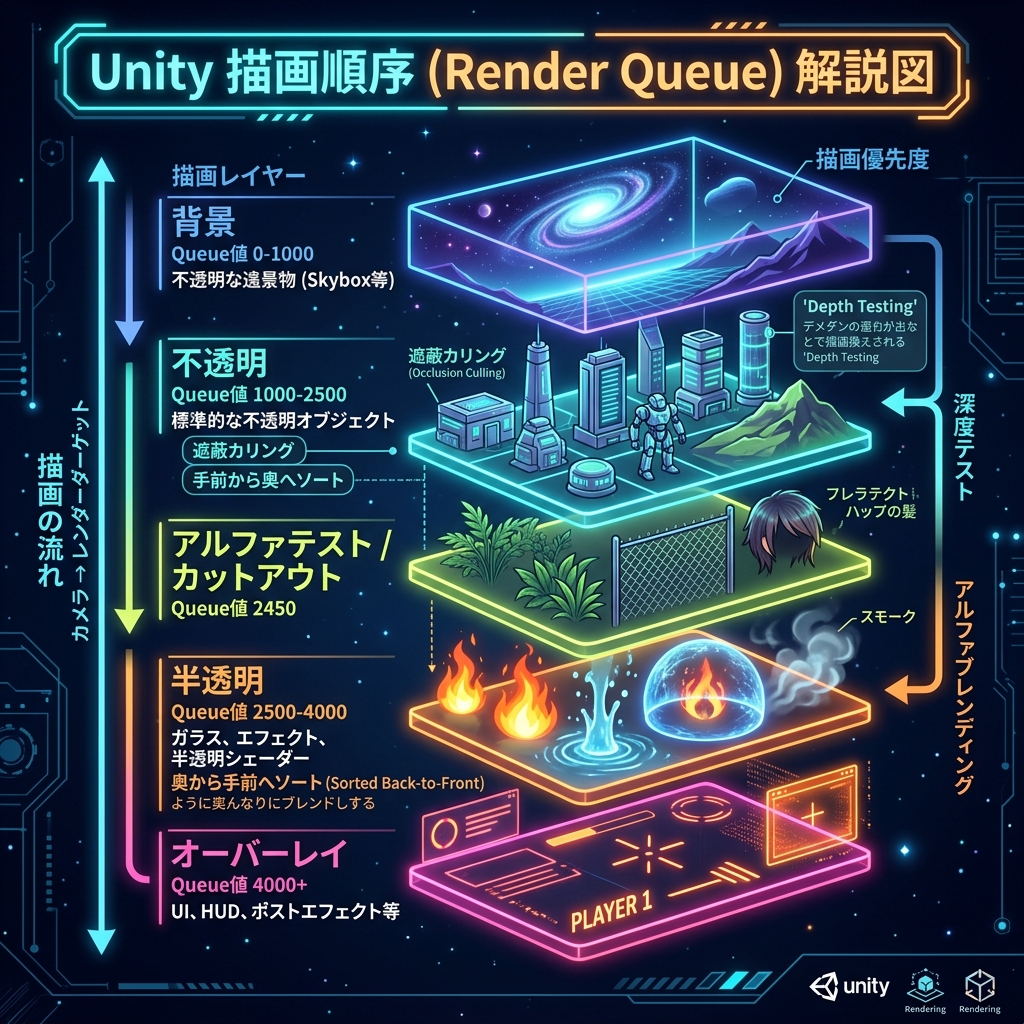
Figure: Infographic that clearly illustrates the basic processing flow and mechanism of Tile-Based Deferred Rendering in Japanese notation
Detailed mechanism and operating principle
Divide the screen into small tiles such as 16x16 pixels, list in advance only the lights that overlap each tile, and process them all at once.