Motion Blur (motion blur / motion afterimage) is a technical term that is extremely important in the rendering and optimization of game graphics (technical art). A technology that creates a blur (afterimage) that stretches pixels in the direction of movement along the trajectory of a quick camera rotation or high-speed movement of an object, smoothing out jitters in the image and creating an overwhelming sense of speed.
An analogy in the real world: When you look out the window of a running train or wave your hand quickly in front of your eyes, the outline becomes blurred and the afterimage appears to stretch horizontally.
Motion blur is a speed effect that beautifully reproduces in-game the ``lingering effect of blur'' that occurs when the subject or camera itself moves during the moment when the camera shutter is open (exposure time).'' Thanks to this blurring, even if the game's frame rate drops to around 30FPS, the human brain can interpolate the stutters that appear in a flip book and perceive it as ``extremely smooth, connected motion like a movie,'' making the sense of speed and punches much more convincing.
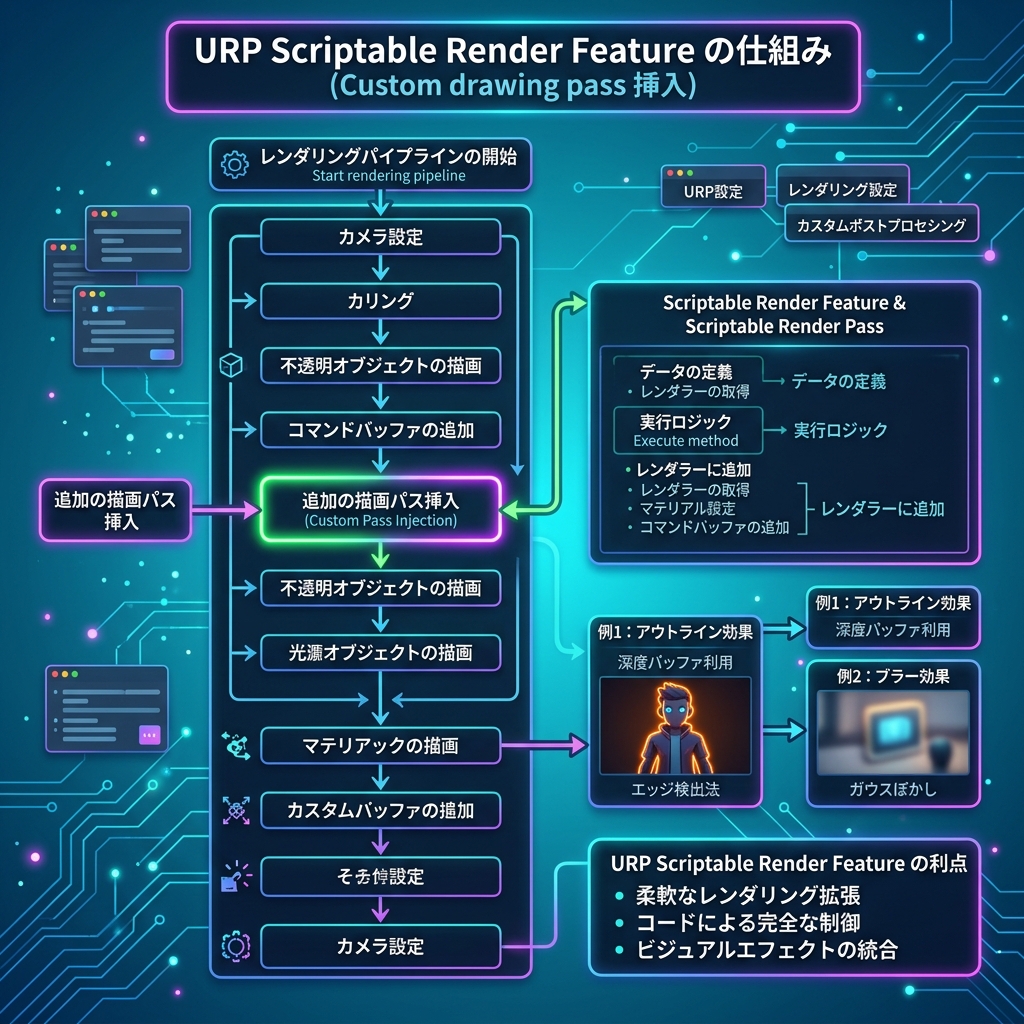
Illustration: Motion Blur (Motion Blur / An infographic that clearly illustrates the basic processing flow and mechanism of motion afterimages in Japanese.
Detailed mechanism and operating principle
Add "Motion Blur" to the Post Processing volume and set the intensity (Quality and Intensity). This allows the screen to blur pleasantly depending on the camera's rotation speed.