Temporal Anti-Aliasing (TAA / Temporal Anti-Aliasing) is a technical term that is extremely important in the rendering and optimization of game graphics (technical art). The latest anti-aliasing technology superimposes and blends the past several frames' worth of drawing results (time axis information) and pixel movement speeds (motion vectors) for each frame, beautifully erasing harsh jagged edges of polygons and minute noises (flickering).
Real-world analogy: Temporal blending magic that makes each page of a flipbook that shakes violently smooth and smooth like a scene from a movie by just a little bit ``overlaying it with the afterimage of the previous page to blend it''
TAA is a time-traveling smoothness system that completely blurs and erases the noise of ultra-fine wire mesh and tree leaves by giving up on trying to correct jaggedness in just one current frame, and superimposing and averaging three to four past frames of ``slightly deviated past pictures.'' Because the direction in which the character moves (motion vector) is accurately calculated backwards and superimposed, even while the character is moving, the screen maintains a very high-quality, noise-free, high-quality screen that looks as if it had been photographed.
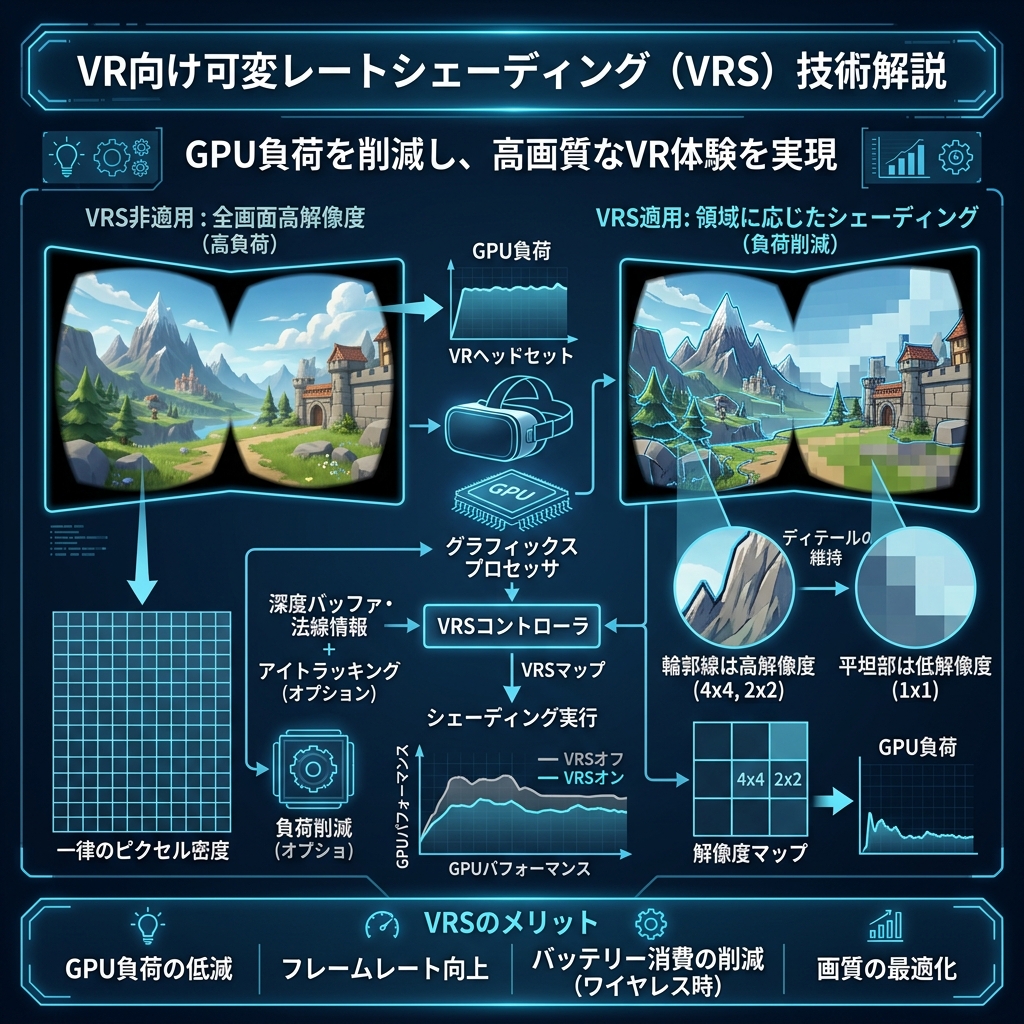
Illustration: Temporal Anti-Aliasing (TAA / An infographic that clearly illustrates the basic processing flow and mechanism of Temporal Antialiasing in Japanese.
Detailed mechanism and operating principle
Select "Temporal Anti-Aliasing (TAA)" in the "Anti-aliasing" item of the URP camera settings. This blends the colors of the previous frame to smoothly neutralize any flicker.