VRAM (Video RAM) is a technical term that is extremely important in game graphics rendering and optimization (technical art). Explanation of the ultra-high-speed working memory dedicated to the graphics card (GPU) that stores textures, 3D meshes, and various screen buffers during rendering.
Real-world analogy: A drawer with a drawer placed right next to the desk for ultra-high-speed work
VRAM is a special drawer placed right next to the desk that can be opened and closed very quickly for designers (GPUs) to spread out and work on drawings (textures) and models (mesh). Assets brought from the bookshelf (SSD/storage) cannot be worked on unless they are placed in this drawer (VRAM). If a drawer fills up with documents, you'll have to make a round trip to the slow storage room (main memory) on the other side of the room to retrieve the documents, causing your work speed to plummet by a factor of 100 (frame rate collapses).
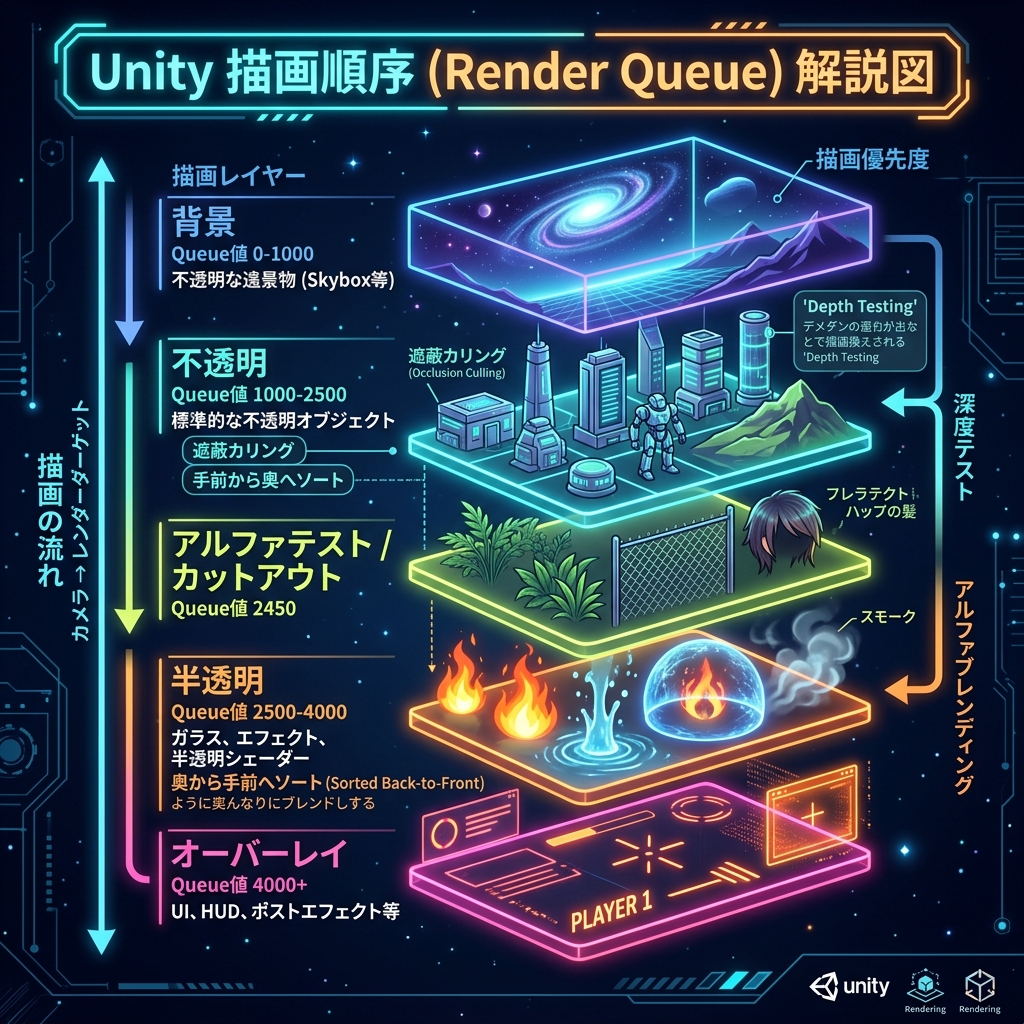
Figure: Infographic that clearly illustrates the basic processing flow and mechanism of VRAM (Video RAM / video memory) in Japanese notation
Detailed mechanism and operating principle
Select the appropriate compression format (ASTC or BC7) in the texture import settings, enable Mipmap, and reduce the size of unnecessary large Render Textures to minimize the VRAM footprint.